Behind the writing
About

I am Giovanni Filardo. I am a technologist. I love exploring software in all its facets, from embedded systems to the cloud, and bringing that breadth to architecture.
Currently, I work as a domain architect within the banking sector, based in Bussum, near Amsterdam. My role is fundamentally conceptual: establishing system responsibilities, defining business capabilities, clarifying boundaries, and advising engineering teams on how distributed systems integrate across the wider infrastructure.
Beyond enterprise systems, my curiosity is anchored in the frontiers of web technologies, blockchain, distributed computing, and artificial intelligence.
First Principles, "Vanilla", and Control
Over years spanning backend systems, frontend development, and architectural leadership, I developed an enduring conviction: favour best-of-breed simplicity over monolithic frameworks.
When you build on heavyweight frameworks, you outsource your technical destiny. You tie your project to someone else's lifecycle, assumptions, and breaking changes. In contrast, working close to vanilla primitives—or composing small, focused libraries—gives you true sovereignty over what you create. Control and freedom matter.
For years, the mainstream argument against this approach was developer velocity: "You can't reinvent the wheel." But the rise of AI-assisted engineering fundamentally shifts this equation. Today, we can build custom, minimal, and optimal systems directly from first principles without drowning in accidental complexity.
I carry this same conviction into computing topologies: software should be decentralized and peer-to-peer by default. The client-server paradigm centralizes control and lacks censorship resistance. While distributed peer-to-peer architectures are often labelled "too complex," that complexity is largely an illusion of tooling. We spent thirty years refining client-server infrastructure; once we invest equivalent care into peer-to-peer primitives, building decentralized systems will feel entirely natural.

The Laboratory: Prototypes & Business Opportunities
Logging off from work does not mean leaving the keyboard behind. In fact, many of my most invigorating hours happen right here in my personal workshop.
My private repositories are a dense proving ground filled with experiments and proofs of concept. I love the visceral feedback loop of building prototypes from scratch—whether probing a decentralized protocol, stress-testing an AI interaction model, or developing bespoke web utilities. Documenting the architectural mechanics and lessons from these prototypes is one of the core reasons this blog exists.

Crucially, I do not look at code in a vacuum. I am constantly observing technology through an entrepreneurial lens, evaluating whether a proof of concept holds the kernel of a viable product or a new business opportunity. The ultimate satisfaction lies in bridging rigorous technical craftsmanship with authentic market value.
Antifragile Thinking and the Language of Art
Before committing to computer science, I stood at a crossroads: I contemplated studying art and cinematography. I chose technology, but I never left art behind.
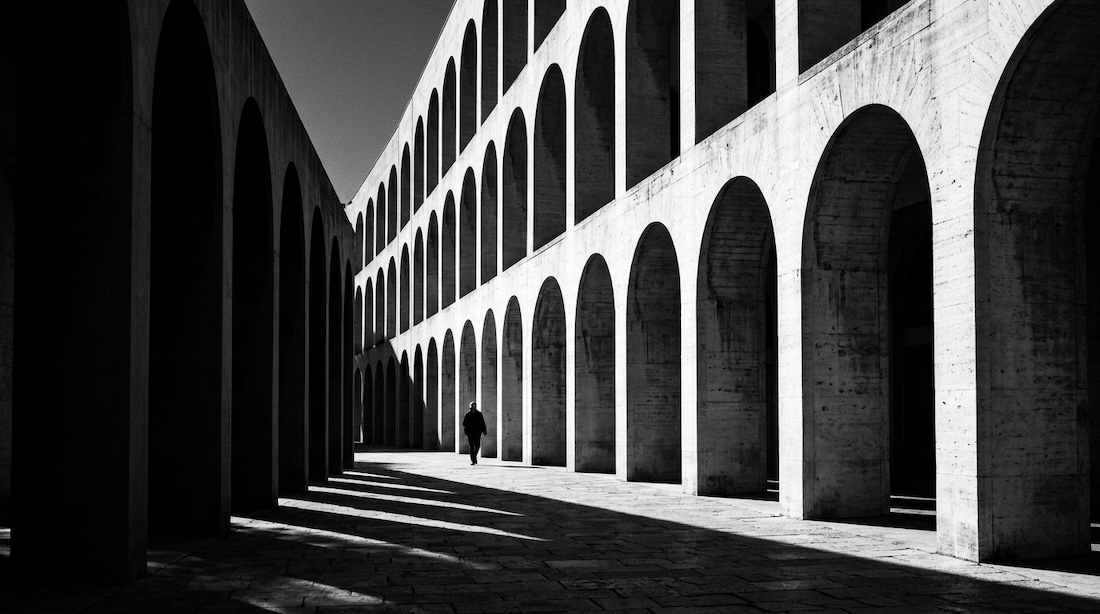
Human-made artifacts carry an irreplaceable resonance. Art is fundamentally an ambiguous language—and that ambiguity is its greatest virtue. Consuming art demands introspection: you do not merely receive a message; you complete the act of creation by generating the interpretation yourself.
This dynamic mirrors how I view human intellect: thinking is antifragile. Like muscle tissue or immune systems, our cognitive capabilities thrive under resistance and atrophy in its absence. As we delegate increasingly more execution to artificial intelligence, the deliberate effort to think, dissect, and solve hard problems becomes an essential discipline. Wrestling with problems is one of humanity’s greatest gifts; we must protect our appetite for it.
The Arc: Changing Lenses
Early in my career in Italy, I moved quickly through technical ranks to become CTO of a 50-person technology company. Yet after leading at that scale, I chose to relocate to the Netherlands and step back into hands-on engineering—navigating frontend architecture, full-stack systems, and eventually domain architecture.
Colleagues often asked why I took what looked like a "step back." But to me, it was never a regression—it was simply shifting lenses. Technical leadership and hands-on systems design examine the same reality from different vantage points, and there is immense fulfillment and joy on both sides.
When the Screen Closes
For all the pull of systems, protocols, and code, my center of gravity is at home. I share life with my wonderful and deeply supportive wife, and together we are raising two bright, lively children.

My life away from the screen revolves around:
- Movement & discipline: Regular strength training and physical fitness.
- Family & stillness: Spending unhurried time with my children, and embracing the restorative art of the Italian dolce far niente during holidays back home.
- Visual & auditory arts: Seeking out classic, modern, and contemporary painting, sculpture, and music.
- Light & pixels: Practicing photography and writing creative programming sketches in generative art (like the autonomous flocking simulation on this site's home page).
Connect
If you would like to discuss software architecture, decentralized systems, AI-assisted engineering, proof-of-concept incubation, or generative art:
- Connect with me on LinkedIn
- Follow long-form writing via the RSS feed
- Browse the article index for recent essays